Natasha Fry on Women, Leadership, and the Future of Fleet Electrification
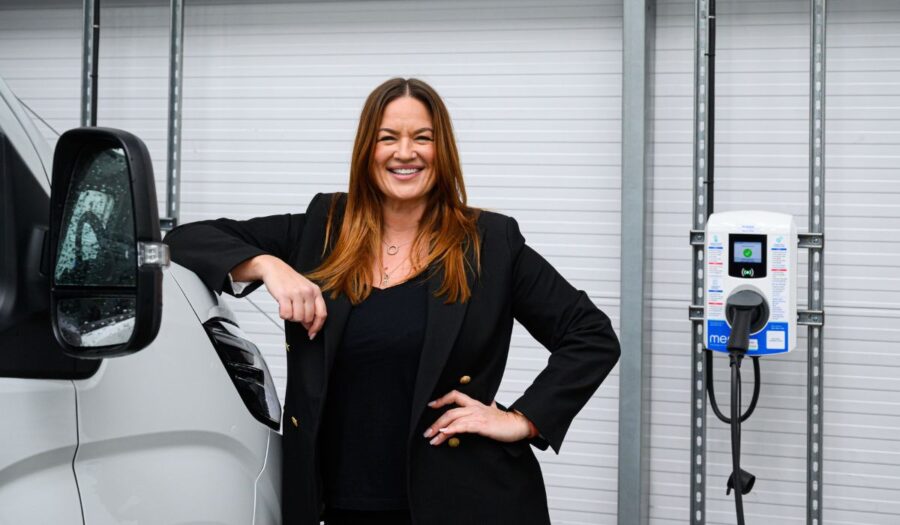
Mer Fleet Services (MFS): fleet and logistics is a male-dominated industry. Has that always been your experience?
Natasha Fry (NF): Yes. Heavy goods vehicles (HGVs) are a good example. Only a small percentage of drivers are women, as are the depot and fleet managers, and the operational teams. I don’t say that as a criticism, it’s just a fact about the industry – one I’ve navigated my whole career.
Over that time things haven’t been uniform, though. Early on, I worked in a large corporate with a bureaucratic culture that was resistant to new voices. Reflecting on my time there, I see that red tape can be a barrier for many women, not just old-school attitudes. When I moved into electrification, working for a smaller, more entrepreneurial business, everything shifted. I had far more autonomy, and I started to see the gender balance shift too.
MFS: Why do you think electrification specifically has drawn in more women?
NF: Because it’s still being defined. It’s not a legacy industry with decades of entrenched norms. So when a sector is still being built from the ground up, your ability to succeed comes down much more to what you can deliver – your skills and capabilities – rather than your gender or your background. That’s an attractive environment, which naturally draws in talented women.
MFS: Your article talks about the industry moving away from “installation-and-done.” What does that change look like?
NF: For a long time, our industry has operated transactionally: a fleet needs chargers, a CPO installs them, and the relationship largely ends there. In the worst cases, that leaves fleet managers stranded with the wrong infrastructure and no one to call when something goes wrong.
What I’m seeing now, and what the smartest operators are already responding to, is a shift towards long-term relationships – optimising infrastructure over time, understanding how a fleet’s needs evolve, and being an ongoing adviser rather than a one-off contractor.
MFS: So how does that connect back to what you said about diversity?
NF: Because the change in approach brings with it a change in the skills that the sector needs. The skills that matter today are the ones that build trust over many years, not just the time it takes to break ground and get electrified. In my experience, the relational skills needed are often the ones women lead with instinctively – and they’re skills many of us have had to build just to establish credibility in a male-dominated sector. As the industry moves into this more consultative phase, I think that naturally opens the door to a broader range of people leading it.
MFS: You’ve said fleet leaders won’t need to become technical experts to succeed in the future. What do they need instead, and what do CPOs need to offer?
NF: Leaders need the confidence to ask the right questions, and the judgement to lean on the right experts. They don’t need to deal with every technical issue themselves. What CPOs need is a change in their basic proposition. They need to take on more energy management, thinking about a depot’s total energy profile and making the most of it using demand flexibility, solar, and more. They need to help fleet managers exploit their data better. And, I believe, the best CPOs will start to look at storage as a service: treating batteries as an ongoing source of value, not a one-off purchase. To return to the leadership perspective, none of that requires engineering expertise, but it does require leaders to deeply understand the needs of their customers, and see clearly where the market will be going over the next several years.
MFS: Finally, what’s your advice for women coming into fleet and e-mobility today?
NF: Put yourself forward. Too often people wait to be noticed rather than making the case for themselves. So be vocal about what you’ve achieved and where your strengths lie. You also don’t need answers to everything. Over my time, I’ve learned far more from asking good questions and drawing on people around me than I ever would have by pretending to have it all figured out. That willingness to lean on others is what I’ve seen in the strongest people I’ve worked alongside.
The industry is changing fast, and I don’t think the future of fleet will be determined by who has traditionally held the job titles. It’ll be determined by who has the skills, the adaptability, and the ability to deliver. For CPOs, success will come down to having the right people, and an offer innovative enough to match where the market is heading.