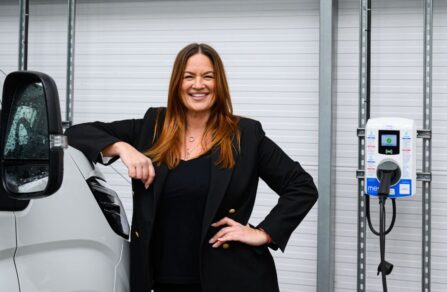
Natasha Fry on Women, Leadership, and the Future of Fleet Electrification
Natasha Fry, Chief Commercial Officer at Mer Fleet Services, has ...

In this blog: Optimise Energy Consumption | Be Environmentally Friendly | Get Creative
This post was updated on 28/01/2026
There’s no question that electric vehicles (EVs) are more environmentally friendly than their petrol or diesel counterparts. Lifetime emissions of EVs are between 73% and 78% lower than those of ICE vehicles (1), while Plug-In Hybrids (PHEVs) are 30% less and traditional hybrids are 20% less.
However, EVs still have a carbon footprint. Even though they produce more emissions during manufacturing, they typically ‘break even’ in around 2 years (2), especially if they are charged with electricity generated by renewables.
Another way they contribute to emissions and pollution is through driving, and the particles generated from their use. So, although EV driving is naturally more environmentally friendly than driving an ICE vehicle, there are further ways we can reduce their impact. For EV fleet operators, this is especially important because even small changes can add up across multiple vehicles.
This blog explores how fleet operators can reduce their EVs’ footprint by being mindful of their employees drive, use and charge an EV.
Driving economically uses less energy to travel the same distance, reducing the energy used and therefore your overall emissions. This applies to both EVs and ICE vehicles.
One way to ensure economical driving is by watching your speed and keeping it steady, where possible. Many fleets, especially last mile delivery logistics operate mostly in urban environments, which tends to mean shorter roads, more traffic lights, and plenty of stopping and starting. Harsh accelerating and braking in particular can impact overall range and efficiency, as well as leading to more wear and tear on parts.
On the other hand, driving on motorways, A-roads, and other main routes allows you to maintain a steady speed, without excessive speeding up and slowing down. This reduces your energy consumption, especially over long periods and the large distances that fleet vehicles tend to cover.
Aggressive acceleration and harsh braking mean higher energy consumption and increased expense. Rather, accelerate steadily, and make use of your vehicle’s regenerative braking capability.
EVs can convert some kinetic energy into electricity to recharge the battery. According to the Department for Transport (3), energy recapture through regenerative braking is approximately 10% during normal driving and up to 30% during descents.
That said, it’s still best to maintain smooth and steady driving habits, especially for logistics companies operating vans, HGVs and LGVs which may be carrying heavy loads.
When stationary, turn the vehicle off to reduce loss of unnecessary power. If possible, you could also avoid driving in busy periods of the day (such as rush hour), when you are more likely to be sitting in traffic with your vehicle switched on.
This may be harder to do for fleet vehicles, as they are often used during the working day, but smart route planning and scheduling could help you avoid the worst of the traffic.

Use your heating and air conditioning mindfully to reduce unnecessary energy loss. Nobody wants to sit in a baking hot or freezing cold car, but keeping the temperature at a comfortable 20 °C should help. In the UK, you may not need the heater or AC to achieve this.
Also, using functions like the heated seats or steering wheel will reduce your efficiency.
Making the EV as aerodynamic as possible will help significantly with energy usage. This means keeping the windows and sunroofs shut when driving, especially at speed.
At the same time, reduce excess weight from the car by taking anything non-essential out of the boot. This can have more of an impact when regularly stopping and starting, such as in towns and cities.
EV tyres have a specific pressure that they need to run at for maximum efficiency. Regularly check them to ensure they are inflated correctly, as running either too high or too low will affect driving and energy usage. For fleet managaers, it’s vital to implement a regular servicing and maintenance schedule for your EVs.
You can make driving an EV even more climate-friendly by charging it with renewably sourced energy. Electricity and heat generated by burning fossil fuels cause toxic and harmful global emissions that contribute to climate change.
At Mer, we provide zero-carbon and 100% renewable energy sourced from wind, hydro, and solar when we supply the energy to the charge points, meaning drivers are powering their EVs using responsibly sourced energy.
If you’re a fleet operator with depot charging, investing in renewables at your premises could significantly reduce your long-term emissions and energy costs. Our experts can work with you to create a fleet depot charging strategy that incorporates renewable energy generation from the outset.
Why not download our EV Fleet Depot Charging Guide today to find out more?
Take your EV for its annual service and whenever any issues present themselves, to ensure it is at its healthiest, and therefore its most efficient.
Regardless of how you use your EV, here are a few simple tips to reduce your impact on your surroundings:
Many of us drive the same routes time and again when travelling to work, the school drop-off, and weekly rituals such as evening classes and the gym. Why not consider a car-share with friends, family members and colleagues?
By making your commute more collaborative, you will not only be saving money, but you can also reduce the footprint of driving an EV by cutting down on the number of trips you take.
Owning and driving an EV is already a significant step in reducing your emissions and your ongoing motoring expenditure. But by driving gently, keeping your EV in good condition, planning your routes and journey times, and opting for renewable energy when charging, you can further limit your impact on the environment.
Many people have EV chargers at home, at work, or as part of their fleet operations. But when you’re out and about, Mer are here to keep you charged up with clean electricity.
With clear instructions on our chargers, multiple payment methods available, and our Driver Portal to show charger location, individuals charging on the Mer network can be confident that driving an EV is a hassle-free and reliable experience.
Find out more about EV fleet charging with Mer.
Natasha Fry, Chief Commercial Officer at Mer Fleet Services, has ...
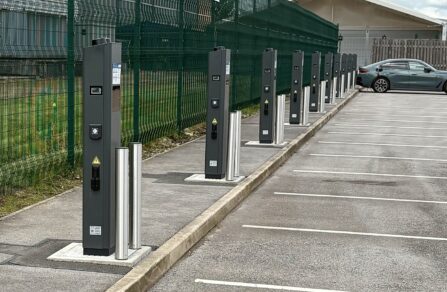
Mer Fleet Services delivered a full end-to-end EV charging soluti...
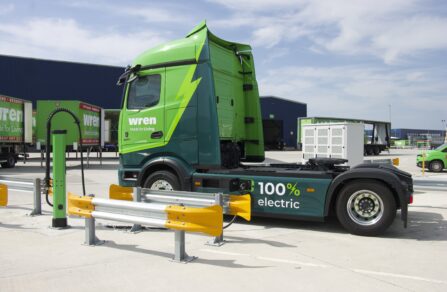
Mer Fleet Services, the specialist fleet electrification business...