
What we’ve learnt from supporting EV fleets through Round 1 of the Depot Charging Scheme
At Mer Fleet Services, we supported organisations including IKEA,...
Although Sweden was already performing highly in the widespread adoption of electric vehicles and the subsequent development of the country’s EV charging infrastructure, it continues to go from strength to strength. In fact, it (along with neighbouring Norway) now boasts very high levels of both private and fleet EV cars and drivers.
In early 2025, Sweden’s car market was experiencing stagnation, coming in at 23% below the five-year monthly average for new car sales. However, the story is very different when it comes to rechargeable vehicles, such as battery electric vehicles (BEVs) and plug-in hybrids (PHEVs).
In March 2025, they accounted for 61% of new car registrations, largely driven by corporate fleet adoption. Registrations of PHEVs alone experienced a 14% YoY growth, and while the electric light commercial sector saw a 29.5% YoY decline, it was an entirely different story for electric buses. There were 134 new registrations in the period, a 332% YoY increase. Across Sweden, electric buses now make up 60% of all new buses.
By comparison, in 2025 to date in the UK, BEVs accounted for just 21.9% of new vehicle registrations.
After passing legislation in 2017, Sweden declared its aim to achieve net zero by 2045. In the Ministry of the Environment’s long-term strategy for reducing greenhouse gas emissions, electric transportation and charging featured prominently.
The strategy notes that domestic transport accounted for one-third of greenhouse gas emissions in Sweden, with cars and heavy goods vehicles being the main contributors. It went on to recognise the need to support the growth of sustainable, renewable fuels and the infrastructure for these fuels, which includes electrification, to reduce emissions within the transport field.
Accompanying this discussion was the acknowledgement of long-term planning for the expansion of electrified roads and the need for rapid charging for heavy goods vehicles.
As of August 2022, there were 384 582 rechargeable vehicles in Sweden. Compared to a decade previous, when there were a mere 582 BEV passenger cars, Sweden’s EV market experienced huge growth. Although there is no definitive figure. As of 2025, this figure could be above 500,000.
By comparison, it’s estimated that there are over 2.5 million plug-in cars in the UK by August 2025.
As one of the first countries to make a net-zero emissions target, it is unsurprising that Sweden takes the 8th spot in Forbes Advisor’s analysis of the countries that are best-suited to EV drivers. LeasePlan’s EV Readiness Index 2022 shows that Sweden’s charging infrastructure maturity has improved since 2021.
According to Sweden’s National Statistics for Electric Cars and Charging Infrastructure there are 16,335 public charging points in Sweden (August 2022).
Breaking this figure down, AC charging dominates the market…
| Output | Charge Points (2022) | Charge Points (2025) | % Change |
|---|---|---|---|
| <49kW | 13252 | Unknown | N/A |
| 50 - 99kW | 1066 | 1544 | +44.8% |
| 100 - 149kW | 402 | 246 | -38.8% |
| 150kW+ | 197 | 8711 | +4321.9% |
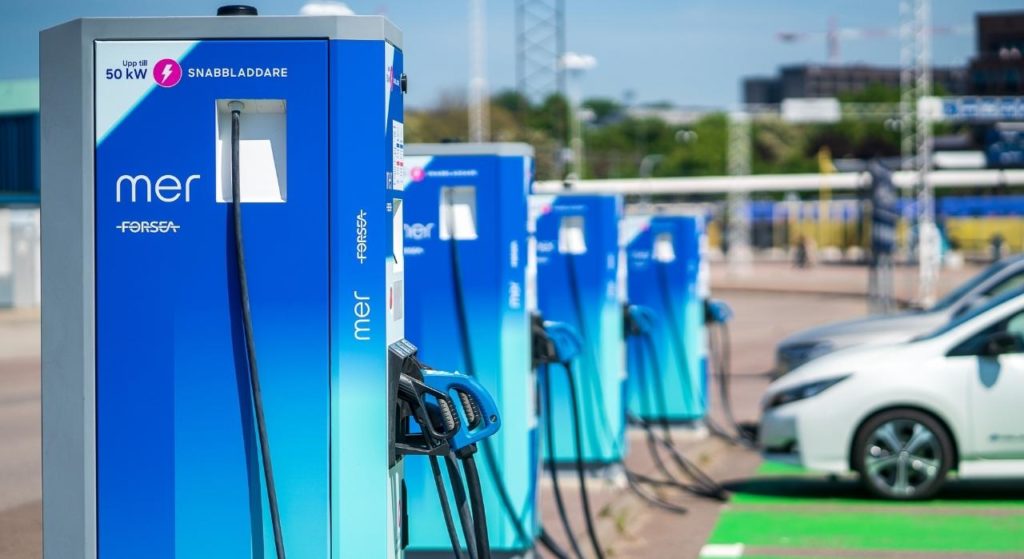
Mer is one of the leading charging operators in Sweden and has over 3000 public chargers in Sweden.
Over the years, the Swedish Government have implemented several incentives for individuals and organisations to move to EV motoring and fleets. These include:
A monthly bonus of SEK 1,500 is proposed for eligible motorists who are buying or leasing a new BEV. Also, BEVs and PHEVs are exempt from, or pay a reduced, malus surcharge (a CO₂-based tax for high-emission vehicles for 3 years).
From 2025, BEVs used as company cars benefit from:
For the installation of EV charge points, individuals can receive a tax reduction with 50% of labour and materials costs. The tax reduction opportunity also supports the installation of grid-connected solar cell systems and systems for storing self-produced electrical energy.
Klimatklivet supports businesses, municipalities and organisations with ideas for investments, including charging infrastructure, that have a ‘high climate benefit’. The support offered is often in the region of 30-65% of the investment cost, and a maximum of 70% of the investment cost.

However, Sweden’s advances in EV charging are not without their challenges. The expansion of public EV charging is still not progressing at a fast enough pace in relation to the sale of EVs on the Swedish market. With under 40,000 public chargers to provide for over 500,000 drivers of rechargeable vehicles, the infrastructure will still benefit from investment, especially in rural areas.
With numerous financial support packages and incentives available and an even distribution of charging stations across the country, Sweden continues to set a positive example of how EV fleet charging strategies for organisations should be developed.
Having a focused programme of financial support towards installing EV fleet charging architecture means businesses, landowners and drivers will be increasingly inspired to delve into what remains an unfamiliar world for the majority, as will methods such as cutting the annual circulation tax for ‘super green’ cars for the first 5 years after registration.
Supporting citizens in the coming years through what some perceive to be a daunting transition will be crucial to securing the UK’s journey towards a carbon-neutral transportation sector.
Though certain areas of Sweden have received more infrastructure development to date, continuing the investment across the country as a whole will see more drivers perceive electric driving as something that is accessible for all, regardless of location.
The UK can follow the likes of Sweden, Germany, and Norway by ensuring an even distribution of charge points to encourage UK residents to support the EV transition, in both their personal vehicels and fleet cars.
Currently, the UK’s public charging infrastructure is still heavily skewed towards London and the South East, with places like Northern Ireland, Wales, and parts of the north of England having to make do with less, as we can see in the figures below from Zap Map:
Sources
At Mer Fleet Services, we supported organisations including IKEA,...
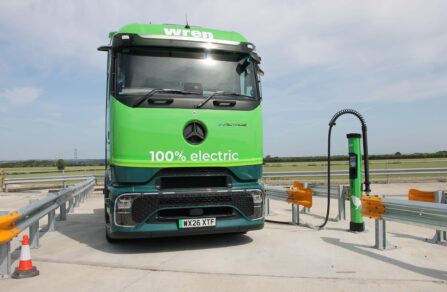
When Wren Kitchens introduced its first electric HGVs, the chargi...
Natasha Fry, Chief Commercial Officer at Mer Fleet Services, has ...