

An Introduction to Electric Commercial Vehicles and Electric HGVs
We look at the electric commercial vehicle market in the UK, what...

Fleet decarbonisation is a strategic move that can reduce long-term costs and improve operational efficiency. In this article, we explore how organisations can reduce emissions at the depot, work with experienced EV fleet charging partners, and tap into smart funding models to make the switch to electric fleets both practical and cost-effective.
Since setting the goal of reaching net-zero carbon emissions by 2050 in the 2008 Climate Change Act (1), many organisations have pioneered their own cost-effective fleet decarbonisation strategies with EVs playing a crucial role.
Fleet decarbonisation is the method organisations use to reduce the carbon emissions of their fleets. The principal way of going about this process is through the phase out of ICE vehicles and shifting the makeup of their fleet to electric vehicles. This process helps to ensure regulatory compliance, boost sustainability goals and improve operational costs.
Transport makes up the biggest emitter of carbon in the UK (2) outperforming even heavy industry and the energy sector. This has meant that the Government has turned its focus on the transportation sector to decarbonise. The ZEV mandate is one such piece of legislation designed to end the sales of internal combustion vehicles. This has meant that businesses which have a fleet must find EV alternatives.
While policies such as reducing business travel and utilising more renewable energy can help to meet decarbonisation targets, fleets are often one of the biggest producers of Scope 1, 2 and 3 carbon emissions for most organisations. Therefore, switching your fleets to EVs is one of the best ways to reduce your carbon footprint. While the initial costs might seem steep, there are several ways that organisations can manage their EV fleet transition in a way that is more cost-effective in the long term.
Your fleet is the key to cost-effective decarbonisation. Just as every journey your fleet takes starts and ends with the depot, your decarbonisation strategy should revolve around it too. Transitioning to EV vehicles can be a daunting prospect due to its complexity, especially as there is no ‘one-size fits all’ solution.
However, what every company shares is a desire to reduce costs and carbon emissions. The mistake many have made in the past is to look at the short-term costs, rather than the TCO. Ultimately, the aim is to make transitioning to EVs a no-brainer for the organisation.
To achieve this, many organisations will turn to an established EV charging partner. Many lack the rare internal skills and knowledge base to successfully navigate the transition to EVs on their own. The EV charging partner will be able to draw upon its own experience, skills and tools to deliver a reduced TCO.
There are many ways that an EV charging partner can achieve this such as load-balancing, aggregated energy procurement and even employing competitive hedging strategies to optimise energy market opportunities. In the past these partners might have only offered the hardware and installation, but due to the increasing complexity of the market it made more sense to work together.
This increased level of cooperation between EV charging partners and fleet owners has meant that alternative forms of funding have emerged. ‘Infrastructure-as-a-Service’ and ‘Charging-as-a-Service’ models have afforded greater scalability, while decreasing the TCO. These models help fleet managers to more accurately anticipate costs since the fleet owner is paying for usage rather than additional maintenance and support.
As time goes on, we anticipate that EV charging partners and fleet owners will further integrate their processes as data is shared readily between the two. As the EV fleets scale in size, and the need for more electrified depots becomes paramount, innovative funding models and close partnerships are the key to successfully reducing the costs of decarbonisation.
If you are interested in finding out more about how we can help you to decarbonise your fleet while delivering a lower TCO, visit our Fleet Depot Charging page.
We look at the electric commercial vehicle market in the UK, what...

Our expert Cameron Galloway discusses the key elements of Mer’s E...
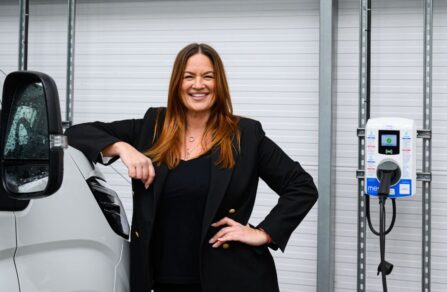
Natasha Fry, Chief Commercial Officer at Mer Fleet Services, has ...