
What the new EV funding for trucks, e-vans and depot charging means for fleets
The UK Government has announced a £1 billion funding package to s...
| Country | Language |
|---|---|
 Deutschland
 |
de / en |
 Norge
Norge |
no / en |
 Sverige
 |
sv / en |
 United Kingdom
 |
en |
 Österreich
 |
de |
 mer.eco
|
| Country | Language |
|---|---|
|
Deutschland |
de / en |
|
Norge |
no / en |
|
Sverige |
sv / en |
|
United Kingdom |
en |
|
Österreich |
de |
|
mer.eco
|

Despite the pace of last mile fleet electrification showing no signs of slowing down, and the costs associated with ICE fleets continuing to rise as the price of EV operations reduces, many organisations are not where they should be with regards to charging infrastructure.
While the benefits of fleet electrification are clear, including lower operational costs, reduced emissions and a reputational boost, the process comes with challenges. Firstly, replacing an entire last mile fleet with EVs requires significant investment.
Secondly, last mile delivery fleet electrification requires a clear strategy that addresses the concerns of staff, outlines what processes and operations will need to be updated, and identifies what vehicles will be required.
For example, will existing delivery routes need to be modified to take into account the chosen EV’s range limits? Will the business require the same amount of vehicles (or more, or less) to function properly?
Most importantly, however, businesses must consider their charging infrastructure. It’s mission-critical.
We work with delivery fleets to solve conflicts between ambitious electrification goals and the challenges around power availability. Mer is seeing that many businesses are focused on whether existing vehicle fleets can be switched to EVs, but are not factoring in the challenges of charging them all.
Charging infrastructure for last mile fleets doesn’t just consist of installing some chargers and being good to go. For example,
A 2023 study in Fleet World (1) found that nearly 50% of local authorities were significantly underestimating how long it can take to install EV charging infrastructure, incorrectly believing it could be delivered in under 12 months. The reality is often close to three years. The same is true across continental Europe (2). In countries like France and Austria connection to their respective grids takes roughly a year, whereas two years is common in Italy and Spain.
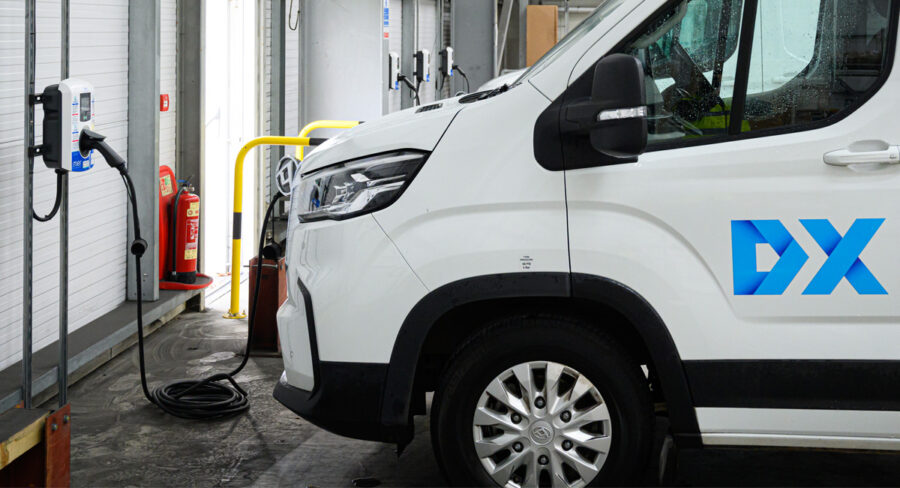
However, Mer’s Fleet Hub for Managers helps last mile logistics operators understand the electrification process and avoid common bottlenecks in fleet electrification planning and infrastructure rollout..
Natasha Fry, Head of Strategic Accounts at Mer and co-author of the guide, said: “Delivery fleet managers are very data-driven when it comes to identifying which vehicles can be electrified and the best way to optimise those assets. However, they need to start taking the same analytical approach to the charging infrastructure and planning for how vehicles will be charged, how much power they’ll require and establishing where that power comes from.
“Final mile fleets are among those driving electrification, and many have set ambitious goals to go even further. But without a true understanding of the power availability at each depot, and the cost implications of upgrading those grid connections, their roll-outs of EVs risk being delayed while budgets are revised upwards.”
Mer’s free last mile EV charging guide covers the importance of including each depot’s energy capacity as a metric when setting fleet electrification targets. It also explains how to calculate power availability and the solutions to overcoming grid limitations. Other steps covered in the guide include;
Mer recommends site surveys at every depot to properly understand the implications of corporate electrification objectives on each site.
“Upgrading your grid connection comes at a price and takes time,” adds Natasha. “But understanding that in the early stages means you go into it with your eyes open. Some last mile fleet logistics operators will be prepared to increase budgets to meet existing targets, while others might prefer to take a more phased approach.
“To run an effective last mile logistics business, data is king. Being armed with the right information on EV charging will ensure you make evidence-based decisions on electrification, rather than make costly mistakes.”
We’ll work directly with you to understand your business, your last mile fleet operations, and your future plans to create a fleet electrification strategy that works and sets you up for the future.
To find out more about a site survey, contact 03300 562 562 or Contact Us
Mer is a European EV charging company, backed by Statkraft, Europe’s largest renewable energy generator. By bringing together its extensive expertise in renewable energy and electric mobility, Mer is on a mission to make EV charging simple, sustainable, and accessible to everyone. In the UK, Mer delivers complete EV charging solutions to businesses and local authorities, helping power the shift to purer transportation across Europe.
The UK Government has announced a £1 billion funding package to s...

For many UK fleet operators, electrification planning often start...

The EV transition can feel confusing for UK fleet operators. Ince...