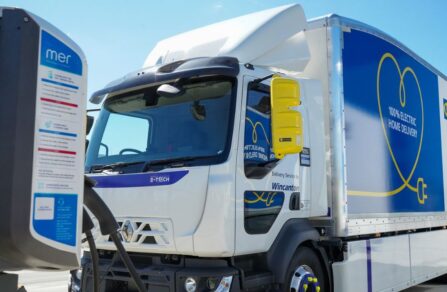
Constructing IKEA’s Last Mile Electrification Infrastructure
IKEA is the world’s largest furniture retailer, with more than 40...
| Country | Language |
|---|---|
 Deutschland
 |
de / en |
 Norge
Norge |
no / en |
 Sverige
 |
sv / en |
 United Kingdom
 |
en |
 Österreich
 |
de |
 mer.eco
|
| Country | Language |
|---|---|
|
Deutschland |
de / en |
|
Norge |
no / en |
|
Sverige |
sv / en |
|
United Kingdom |
en |
|
Österreich |
de |
|
mer.eco
|
In this guide we explore the processes behind electrifying HGVs and other commercial vehicles.
The UK has over 615,000 trucks and 4.8 million vans on the road.
The Government has mandated that 16% of all van sales must be electric.
By 2040 all new heavy goods vehicles must be electric.
The journey to phasing out petrol/diesel commercial vehicles (CVs) and heavy goods vehicles (HGVs) is occurring alongside the electrification of the passenger vehicle market. In 2023, the transport sector produced 29% of all CO2 emissions, making it the largest source of carbon pollution in the UK. Therefore, the Government has placed a heavy emphasis on the sector’s need to decarbonise, placing pressure on commercial fleet owners to switch their vehicles to electric models.
The charging requirements for electric HGVs and large vans are unlike electric passenger cars. Because of the vehicles’ size, frequent use, and often long range, they will demand significantly high-powered charging.
According to ACEA data, it is estimated there will be 299 truck charging hubs constructed by 2027, with the figure growing to 10,000 by the mid-2030s.
For fleet owners, there are two key ways that they can ensure their EV fleets remain operational:
Rolling out the charging infrastructure for your commercial EV fleet is a multi-dimensional process, and making mistakes can risk expensive delays. Some of the key questions to consider are:
Your site has a finite supply of power and electric HGVs require a lot of energy to charge. You will need to ensure that you have enough capacity in your supply to charge your fleet when required, sometimes alongside other business operations. If you do not have the required capacity, then you will need to upgrade your grid connection or explore alternative methods of charging your vehicles.
Every fleet is different. There are multiple approaches you can take when transitioning your fleet to EVs. For instance, you might choose to implement a small pilot project to start off with, switching one of your routes over to EVs and trialling with a small number of chargers at the depot. Or you might have already purchased many EVs – this would require a large-scale installation of the necessary charging infrastructure. Ultimately, either solution will need to be future proofed for further expansion. This could include adequate power supply, enough chargers of suitable power, and the physical space to charge the vehicles.
You will need to select an EV charging partner to help you choose, procure and install the right EV charging solution. They will have the required experts to guide you throughout the process, avoid unnecessary complications, and ultimately, help you protect your investment. They will work closely with your own teams and third-party contractors to deliver the full solution. Finally, they can help you source funding for the project through government EV schemes, grants and intiatives.
You can either handle this part yourself, or select an EV charging company that offers service, maintenance and repair packages that guarantee 24/7 support. This will help you minimise charger downtime and ensure your mission-critical vehicles can get on the road for every shift. Which you choose will depend on your requirements and business operations, but your chosen partner should be able to advise you on the best course of action.
Charging infrastructure installations can be expensive. For fleet owners there are a few business models available that help to alleviate costs depending on your organisation’s unique needs.
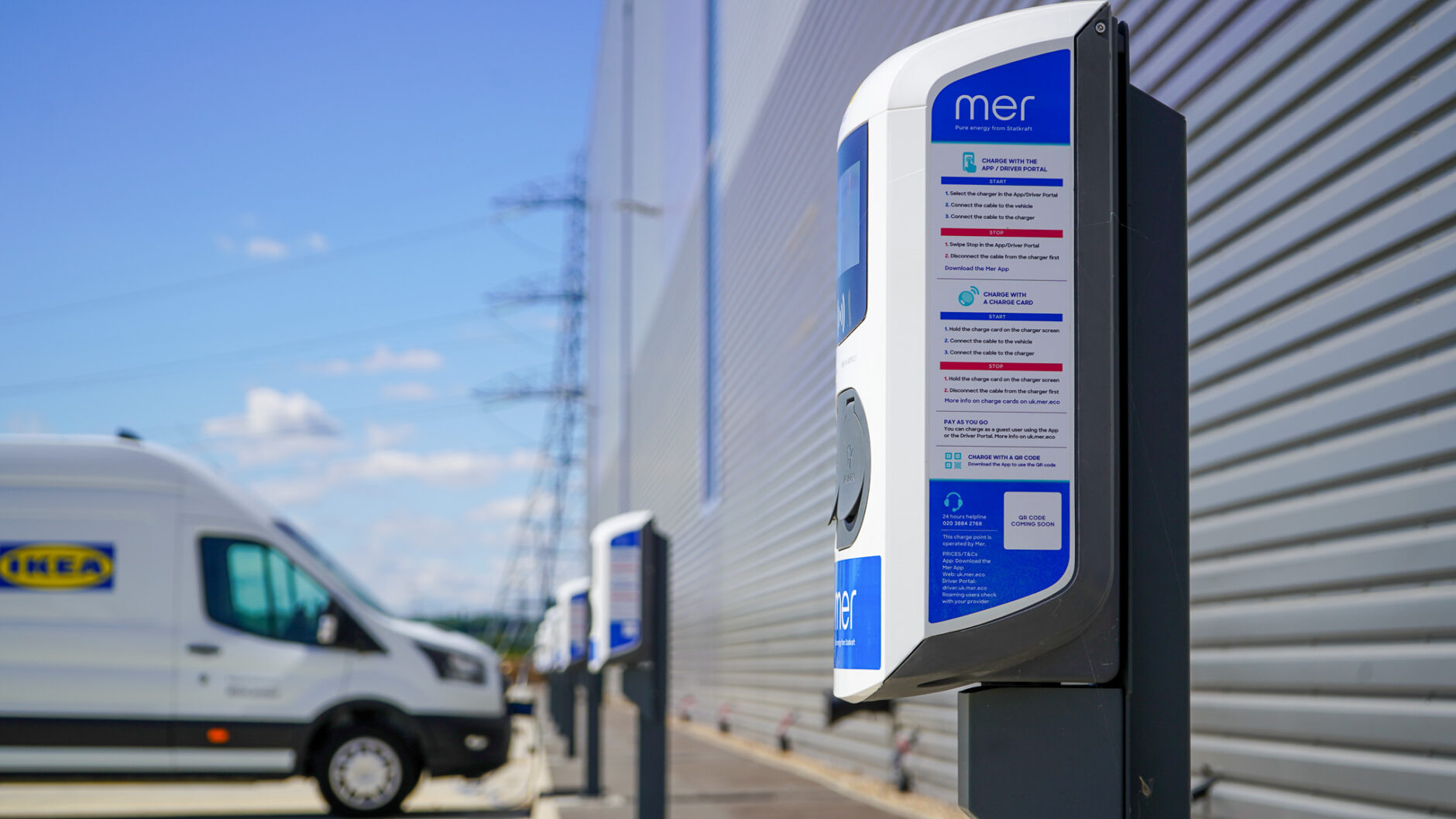
IKEA is the world’s largest furniture retailer, with more than 40...

Electric vehicle charging specialist Mer is pleased to announce a...
Mer’s mission is to make sustainable mobility accessible to every...