
8 Benefits of Installing EV Charging Stations for Your Business
There are lots of benefits of installing EV charging for business...
| Country | Language |
|---|---|
 Deutschland
 |
de / en |
 Norge
Norge |
no / en |
 Sverige
 |
sv / en |
 United Kingdom
 |
en |
 Österreich
 |
de |
 mer.eco
|
| Country | Language |
|---|---|
|
Deutschland |
de / en |
|
Norge |
no / en |
|
Sverige |
sv / en |
|
United Kingdom |
en |
|
Österreich |
de |
|
mer.eco
|

There are over 950,000 fully-electric cars on UK roads. 15.6% of all new car registrations were EVs last November, with 24,359 new electric cars registered in that month alone.
Sooner rather than later, to support this continued growth in electric mobility, businesses and consumers are going to need a suitable network of charging points of various speeds in every type of location, from offices to retail outlets, hotels and to leisure facilities.
In this blog, we cover:
When is it the right time to install EV fleet charging infrastructure at our business premises?
What is the capital outlay and the day-to-day operating costs of fleet electrification?
What benefits can it bring us and our staff?
How do we earn back the investment?
With more pressure than ever before on businesses to prove that sustainability is high on their CSR agenda, now is the time to take action, even if you start small.
Rather than waiting until you have made the switch to an EV fleet, businesses should look to start the process now, due to the lengthy timelines associated with installing EV charging infrastructure. Due to costs and time constraints, a full-scale conversion or introduction of multiple charge points may not be possible immediately – so it might be good to start with a pilot project and then scale up the change.
It’s also crucial to ensure you have a plan in place for properly communicating the plan for fleet electrification across your business.
So, how much does it cost to install fleet EV charging infrastructure? Well, the exact price depends on several factors:
On average, 1-2 charging sessions take place per connection per day. However, can vary significantly depending on your business operations, the number of visitors and employees with an EV and the duration of the charging sessions.
Many businesses will opt to install fast chargers (7kW – 22kW) to begin with before scaling up as needed. This means that if your chosen EV has a 40kW battery and you have a 7kW EV charger, it will take approximately 3.5 hours to reach an 80% charge (from a 20% charged battery).
It may come as a surprise, but most of the costs connected to EV chargers are often related to the day-to-day operating expenses, not the capital outlay.
So, what are the hidden costs and how can you keep them to a minimum?
Many companies include the presence of charging points for electric cars in their choice of a conference or meeting location or in their choice of a hotel or restaurant. Compare this revolutionary change with that of WiFi. A previously rare and unexpected service is now available (freely) everywhere as standard.
In addition, guests can see where charging points are located via Google Maps. There is a good chance that they will stop at a business with a charging point so that they can charge on the go. After all, charging an electric car takes at least half an hour and that is valuable time. With your own charging station(s), you can attract visitors from unexpected horizons.
Are EV charging stations profitable? Depending on the cost model you select for your charge points, you may find you can earn back your investment by charging for electricity.
What is the composition of your vehicle fleet? How many charge points would you need and at what speed to adequately serve employees, visitors and/or customers? Establish what you currently have and what you want to aim for. It then becomes easier to set targets that are ambitious but achievable.
Explore our fleet charging solutions and download the electrification strategy guide.
There are lots of benefits of installing EV charging for business...
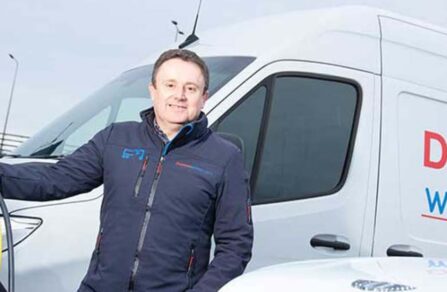
Dawsongroup Vans has one of the most established fleets of vehicl...
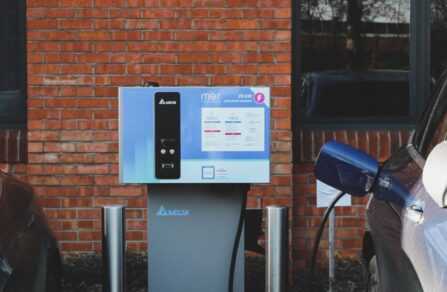
As electric vehicle use becomes more widespread, charging facilit...