
What the new EV funding for trucks, e-vans and depot charging means for fleets
The UK Government has announced a £1 billion funding package to s...
| Country | Language |
|---|---|
 Deutschland
 |
de / en |
 Norge
Norge |
no / en |
 Sverige
 |
sv / en |
 United Kingdom
 |
en |
 Österreich
 |
de |
 mer.eco
|
| Country | Language |
|---|---|
|
Deutschland |
de / en |
|
Norge |
no / en |
|
Sverige |
sv / en |
|
United Kingdom |
en |
|
Österreich |
de |
|
mer.eco
|
The availability of public EV charging infrastructure is essential to the UK’s transition to EVs, and public sector bodies play a crucial role in building out a strong network.
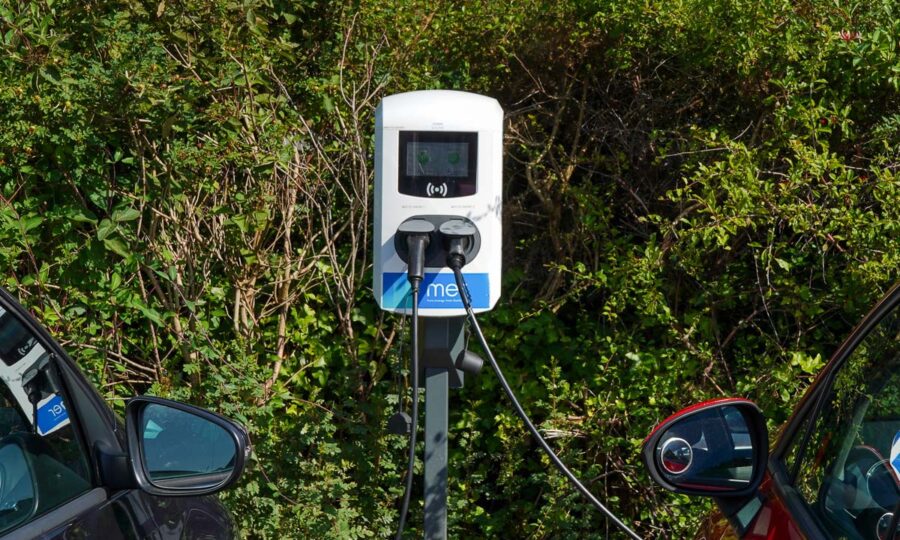
The question, though, is where local authorities should build these EV charging networks? In this blog, Sam Illsley, Head of Public Sector Sales at Mer, explains:
Local authorities and public sector bodies are continuing to invest in electric vehicle (EV) charging hubs, aiming to provide 300,000 charge points by 2030. As of October 2025, there are 86,798 public charging points in the UK, across just over 40,000 locations and with over 121,000 individual connections. This is more than a three-fold increase compared to the end of 2021. However, if it continues at this rate of averaging around 15,000 new chargers per year, the UK will fall some way behind its 2030 target.
This infrastructure continues to be vital to public adoption of EVs, as many households do not have a drive or garage where they can install their own domestic charger. Therefore, these drivers will be reliant on the publicly accessible charging network. What’s more, as EV ownership increases, these locations will need to be able to handle the increased demand, either offering more connections, or higher outputs to turn cars around faster.
However, it is not simply a case of “if you build it, they will come” Public charging hubs need to be convenient, user-friendly, and above all, accessible. Choosing your sites carefully will ensure the infrastructure you are installing does not become obsolete, and drivers instead feel empowered to take up EV driving due to having a convenient location to charge at as they go about their daily lives.
Never has the real estate adage of “location, location, location” been truer.
If you want to optimise an EV charger’s usage, make sure it supports the EV driving population in that specific area. For example, will it also be used by electric van drivers? If so, ensure that at least some bays are the right orientation and size to accommodate light commercial vehicles – they can be considerably bigger than cars.
Likewise, as we see more and more electric motorbikes and mopeds, can you also cater to that market?
Analyse and understand how many EV motorists there are in your chosen area, and whether you believe there is enough demand for this hub. Undertaking market research can help with this part of the process.

More importantly, is it in a convenient location for users? Typically, this will be a destination location, such as local leisure or retail amenities. In both cases, people will often leave their EVs parked for hours at a time while they enjoy some shopping, eating out, or a trip to the gym.
The exception to this rule is DC rapid- or ultra-rapid charging. In this instance, the user profile is more likely a driver needing to “refuel” quickly, so they want a pit stop conveniently located on, or very close to, motorways and major roads, with preferable amenities of toilets, the opportunity to buy a cup of coffee, and free parking.
There are many practical limitations and considerations when choosing a location for your public EV charging infrastructure. For example, does the existing local grid connection have the capacity to support multiple EV charging stations, potentially with different power outputs? Some areas have little or no spare capacity, meaning that you would have to pay for and wait a considerable time for grid upgrades, or invest in onsite energy generation and/or storage systems to make the site viable.
Other logistical considerations include whether the site is accessible to all users and if it is suitable for use as a charging hub. For example:
Furthermore, plan for the future. Does the site offer room for expansion as EV adoption gathers pace? This could encompass three factors:

If we were to summarise all the points we’ve discussed so far, the most important takeaway is to adopt a user-centric approach that is human- and vehicle-oriented. Everything else works backwards from that point.
Choose suitable locations where you know there will be demand for EV charging, where EV charging is convenient, and therefore where drivers are most likely to utilise the infrastructure.
Also, consider how you will market the hub after completion, and whether there are ways to add value to the site from both a usability and financial perspective.
Look for an experienced charge point operator (CPO) who can help you answer all the questions we have covered above. Mer offers a comprehensive service which starts with working with you to plan your infrastructure properly. Our experts can help you decide on the right mix of chargers at the right locations, ensuring that you don’t end up with underutilised infrastructure with poor ROI.
Mer has a proven track record in delivering local area and site analyses, providing public sector bodies with recommendations on both the best locations, road access and the best EV charging hardware.
As part of the process, we create a site design that explains the electrical infrastructure, including the substation and feeder pillar connections, plus precise charger locations right, down to the bollards and bay markings.
Our News and Resources sections have a wide range of expert content that explains everything you need to know about EV charging hubs, including planning and considerations, ROI calculations, future-proofing and more. You can also download our guide for information.
Alternatively, don’t hesitate to contact us to find out more.
The UK Government has announced a £1 billion funding package to s...

For many UK fleet operators, electrification planning often start...

The EV transition can feel confusing for UK fleet operators. Ince...