
New Forest District Council Increases EV Charging Points
Mer supported New Forest District Council in addressing its clima...
| Country | Language |
|---|---|
 Deutschland
 |
de / en |
 Norge
Norge |
no / en |
 Sverige
 |
sv / en |
 United Kingdom
 |
en |
 Österreich
 |
de |
 mer.eco
|
| Country | Language |
|---|---|
|
Deutschland |
de / en |
|
Norge |
no / en |
|
Sverige |
sv / en |
|
United Kingdom |
en |
|
Österreich |
de |
|
mer.eco
|
In this guide, we explore how to implement public EV charging for local authorities in a way that is beneficial to their constituents and the economy.
As of December 2025, there were approximately 1,800,000 fully electric cars in the UK.
As of October 2025, there were over 87,796 charging points across the UK.
The Government expects the number of public chargers to grow to 300,000 by 2030.
EV charging hubs form a critical part of the UK’s overall charging network. Defined as any location with five or more EV chargers, they form a centralised spot for drivers. Unlike on-street charging, they are normally located within a car park or dedicated facility.
EV charging hubs benefit from being able to source more power from fewer grid connections. In turn, this can make the installation process cheaper as fewer trenches need to be dug.
A typical lamp-post charger will offer a 2–7kW output, which means the average family EV will take between 6 and 10 hours to charge.
On the other hand, an ultra rapid charger can provide up to 350kW. This means that a driver can stop for just 10 to 20 minutes at an ultra rapid charging point instead of hours on the street. However, these larger and more powerful chargers are too large for a typical UK street; therefore, EV charging hubs are vital to providing high-performance infrastructure.
A handful of ultra-rapid chargers can serve more drivers than a road’s worth of on-street chargers, all without taking up valuable parking spaces. In addition, the increased accessibility of EV charging at the hubs can help to encourage more residents to adopt electric transport.
In June 2022, the Government introduced smart charging regulations for chargers sold for private use and smart cables.
The regulations aim to help manage the demand for electricity as the UK transitions to mass EV adoption. Smart charging controls how much energy an EV takes from the grid, so charging occurs at the optimal time. This reduces the pressure placed on the grid and the cost of electricity.
Please see the government website for more information regarding compliance and regulations surrounding smart charging.
Mer has supported councils across the UK to level up their EV charging infrastructure. You can find out more about our projects on our case studies page.
There are government incentives available, which can help support your local authority to implement high-performance EV charging infrastructure. Two such examples are:
On-Street Residential Chargepoint Scheme
This scheme provides funding towards the capital costs of public charging installation for residents without private parking, including on-street developments and developments in local authority-owned residential car parks.
The Workplace Charging Scheme
This scheme offers support for local authorities to electrify their fleets and help staff transition to EVs.
There are several different procurement frameworks to make it easier for public sector bodies to procure an EV charging partner to install public EV charge points:
Kent County Council via KCS Professional Services
Mer can provide a full EV charging solution (design, supply, installation, support, and maintenance).
Crown Commercial Services
Mer can deliver an end-to-end charging infrastructure solution (funding, installation, and project delivery).
ESPO
Mer can supply, deliver, install, and commission charge points. We can also service and maintain existing charge points, provide consultancy services, and advise on emerging technologies.
Oxford DPS
Mer can provide a range of solutions. Mer also offers financed models for authorities and councils, including fully funded packages that provide chargers and installation with profit share options.
Assess your selected EV charging partner’s ability to provide long-term support for you and your residents, and their commitment to environmentally friendly charging solutions.
At Mer, we have years of experience in integrating renewable energy sources to power our charging solutions, helping deliver net-zero mobility for your constituents and enabling you to meet sustainability targets.
Meanwhile, it is important to avoid the pitfalls of over-installation. Installing too many chargers can lead to waste, both in the form of capital, and the emissions generated from the construction process.
At Mer, our experts can work with you to analyse user demand and maximise your investment, delivering realistic charging solutions that meet the current demand of the locality, while planning for future expansion.
You must ensure that your chargers are located on a property that makes both economic and practical sense. Our team will analyse all your potential sites to determine which are best suited to install an EV charging hub. We consider everything, including:
From there, we will draw up a detailed plan that lays out the entire charging solution.
Protecting your EV charging infrastructure will ensure its longevity and reliability. Mer supports you and your site after the installation process. We offer robust service level agreements, charge point maintenance, back-office support, a 24/7 UK-based helpline, and much more, depending on your needs.
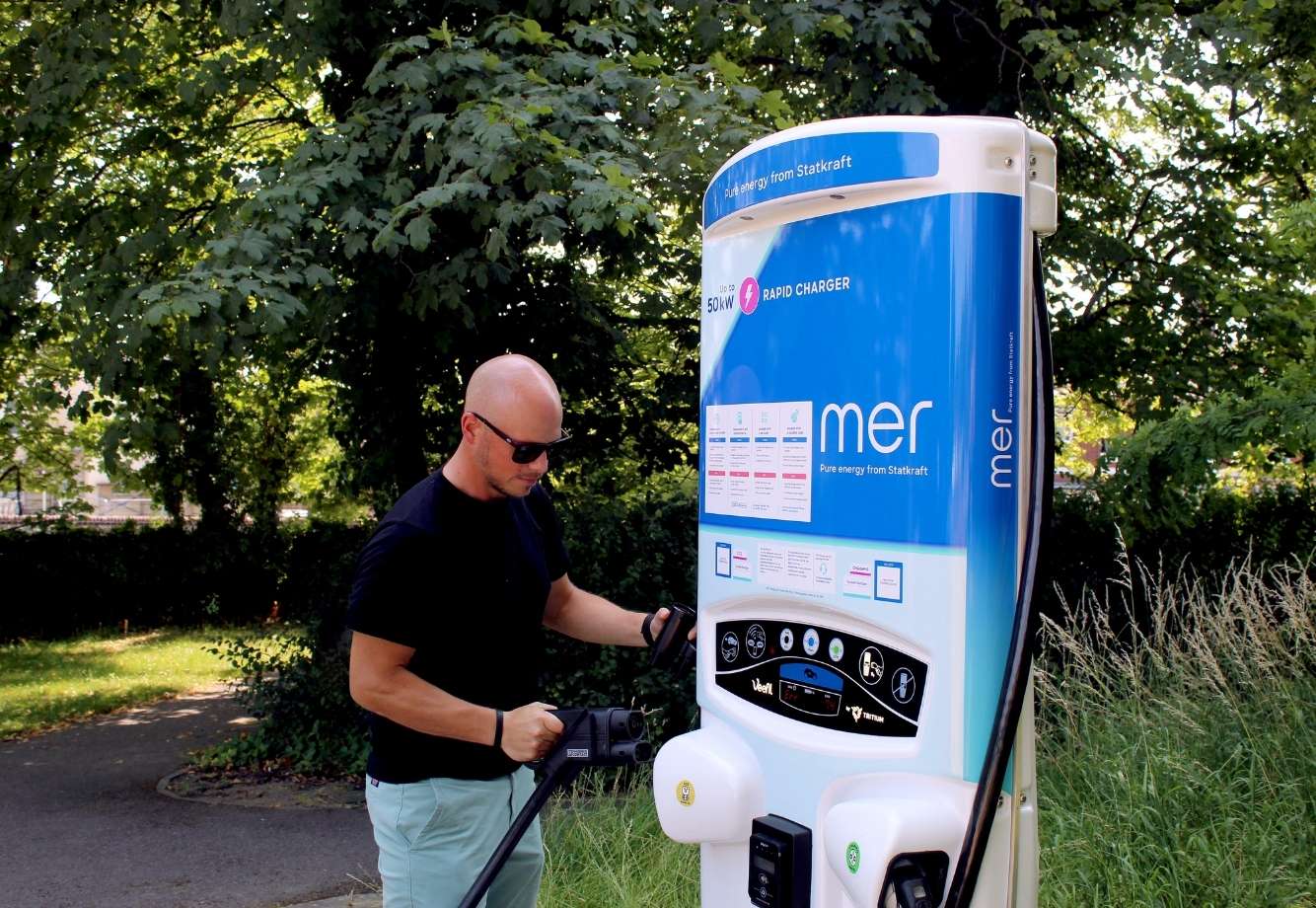
Mer supported New Forest District Council in addressing its clima...
Durham residents and visitors can charge on a reliable, ever-grow...

Electric vehicle (EV) drivers can now access more charging across...