Challenges & Opportunities of Adopting Commercial EV Fleets
The UK intends to ban the sale of all new ICE vehicles by 2030, a...
| Country | Language |
|---|---|
 Deutschland
 |
de / en |
 Norge
Norge |
no / en |
 Sverige
 |
sv / en |
 United Kingdom
 |
en |
 Österreich
 |
de |
 mer.eco
|
| Country | Language |
|---|---|
|
Deutschland |
de / en |
|
Norge |
no / en |
|
Sverige |
sv / en |
|
United Kingdom |
en |
|
Österreich |
de |
|
mer.eco
|

Sales of electric commercial vehicles and vans are booming in the UK, with 4,262 sold in September 2025(1), the highest ever recorded in a single month. This represents a 41.1% YoY increase and contributed to an 8.9% market share of electric vans. In the same month, Autotrader reported a 75% YoY increase in ad views for electric vans(2), a 149% increase in enquiries to dealers, and a 16% decline in diesel ad views.
As of November 2025, there are over 95,000 electric light commercial vehicles(3) (under 3.5t) on UK roads, representing 1.9% of total LCVs. In the same month, new electric van registrations accounted for 11.8% of the total.
Commercial vehicles have different demands and requirements, but as electric vans and HGVs come with ever-increasing ranges, higher payloads and lower prices, we explore what some of the best electric vans are in the UK in 2025.

Price: From £47,100 +VAT
Range: 285 miles
Max Charging Capability: 130kW
Max Payload: 1,125kg
Max Volume: 14.8㎥
The latest Renault Master E-Tech is a major transformation from its previous iteration, and one that’s made it one of the best electric vans on the market in 2025. Compared to the last model’s 115-mile range, the current generation offers more than double that, which should be enough for almost all commercial use cases.
As a large van, you get plenty of space and a decent maximum payload. In both capacity and payload, the Master E-Tech is on par with some of the other major electric van players in the Ford e-Transit and Mercedes eSprinter, and what’s more, it also has a 2,500kg towing rating.
Lastly, the Master E-Tech has been praised for its car-like interior, good infotainment system, and features like air con, rear parking sensors, and automatic headlights and wipers as standard. A perfect addition to a last-mile delivery EV fleet.
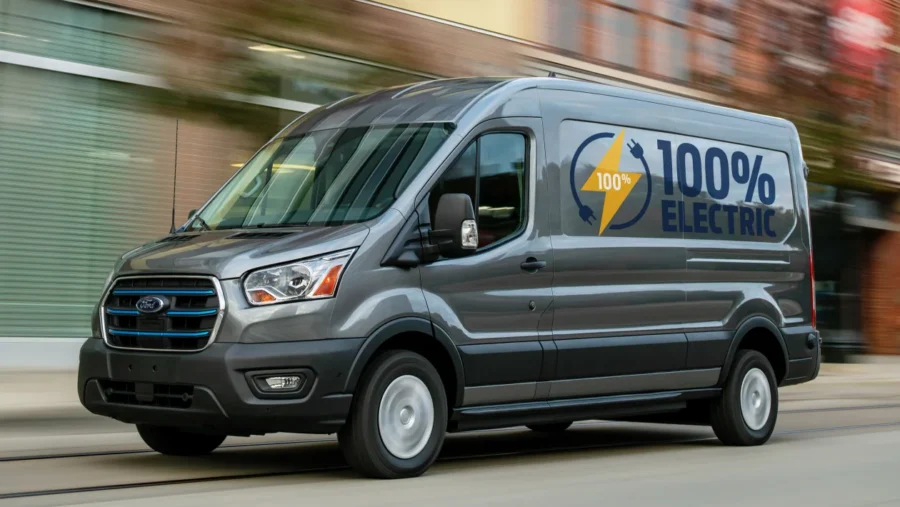
Price: From £49,545 +VAT
Range: 249 miles
Max Charging Capability: 185kW
Max Payload: 1,745kg
Max Volume: 15.1㎥
The Ford Transit needs no introduction. In one form or another, it’s been a fixture on Britain’s roads for 60 years. Although available since 2022, the E-Transit still tops lists as one of the best electric vans you can buy.
In 2024, the Enhanced Battery update added even faster AC and DC charging and increased range, albeit at a cost of a reduced maximum payload to 1,484kg. That means that the new battery can charge from 10% to 80% in approximately 28 minutes, which is perfect for fleet operators on tight turnarounds.
Because it’s a transit, there are 19 different combinations of body length, height, and cabin type to suit any organisation. Equipment-wise, there’s everything you’d expect, and the addition of different driving modes and two-stage regenerative braking allows for efficient driving to maximise range.
Price: From £27,000 +VAT
Range: 181 miles
Max Charging Capability: 100kW
Max Payload: 698kg
Max Volume: 2.9㎥
Price: From £43,630 +VAT
Range: 204 miles
Max Charging Capability: 125kW
Max Payload: 1,088kg
Max Volume: 6.8㎥
Although separate vehicles, we’ve covered the two smaller transits together, as they offer a similar driving experience and fill the niche for small electric fleet vans that are ideal for urban areas, especially the Courier. That said, both have the range, power and comfort to undertake longer journeys.
The Courier is the smallest, about the same size as a family SUV, while the Custom fits into the Medium Van category. Both offer excellent storage space and payload for their category, and are described by Auto Express as being ‘car-like’ to drive.
The Custom comes with a range of engine options, starting at 134bhp, but 215bhp and 281bhp models are available for those who need a bit extra. Compared to its rivals, the Custom offers more storage space than the likes of the Vauxhall Vivaro Electric, and also has a 2,300kg max towing limit.
The Courier comes in two trim levels, with the Trend offering features such as 360 Ford Co-Pilot Parking Assist, adaptable storage space, and a fully customisable 12” digital display. The Limited version offers all of this, as well as premium 17” alloys, rain-sensing wipers and wireless charging.
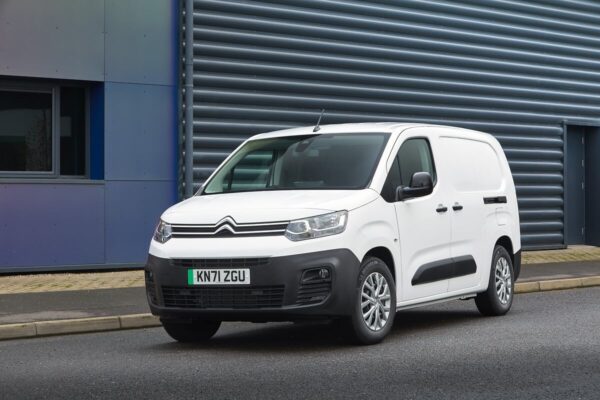
Price: From £27,850 +VAT
Range: 220 miles
Max Charging Capability: 100kW
Max Payload: 781kg
Max Volume: 4.4㎥
The Citroën e-Berlingo is part of a family of small vans that also includes the Peugeot e-Partner, Toyota Proace City Electric, Fiat e-Doblo and Vauxhall Combo Electric. Fundamentally, these electric vans are all the same, with just superficial changes in appearance, cabin interior and aftercare. For example, Toyota offers a 10-year service warranty, longer than any of the others. However, we’ve opted for the e-Berlingo because it’s priced very competitively.
They all offer fast charging for quick turnaround at the depot, light steering for easy city driving, large cargo bays, and different driving modes to balance range and performance. In particular, Citroën offers thicker, more comfortable seat padding, which is ideal for those who spend a lot of time behind the wheel.
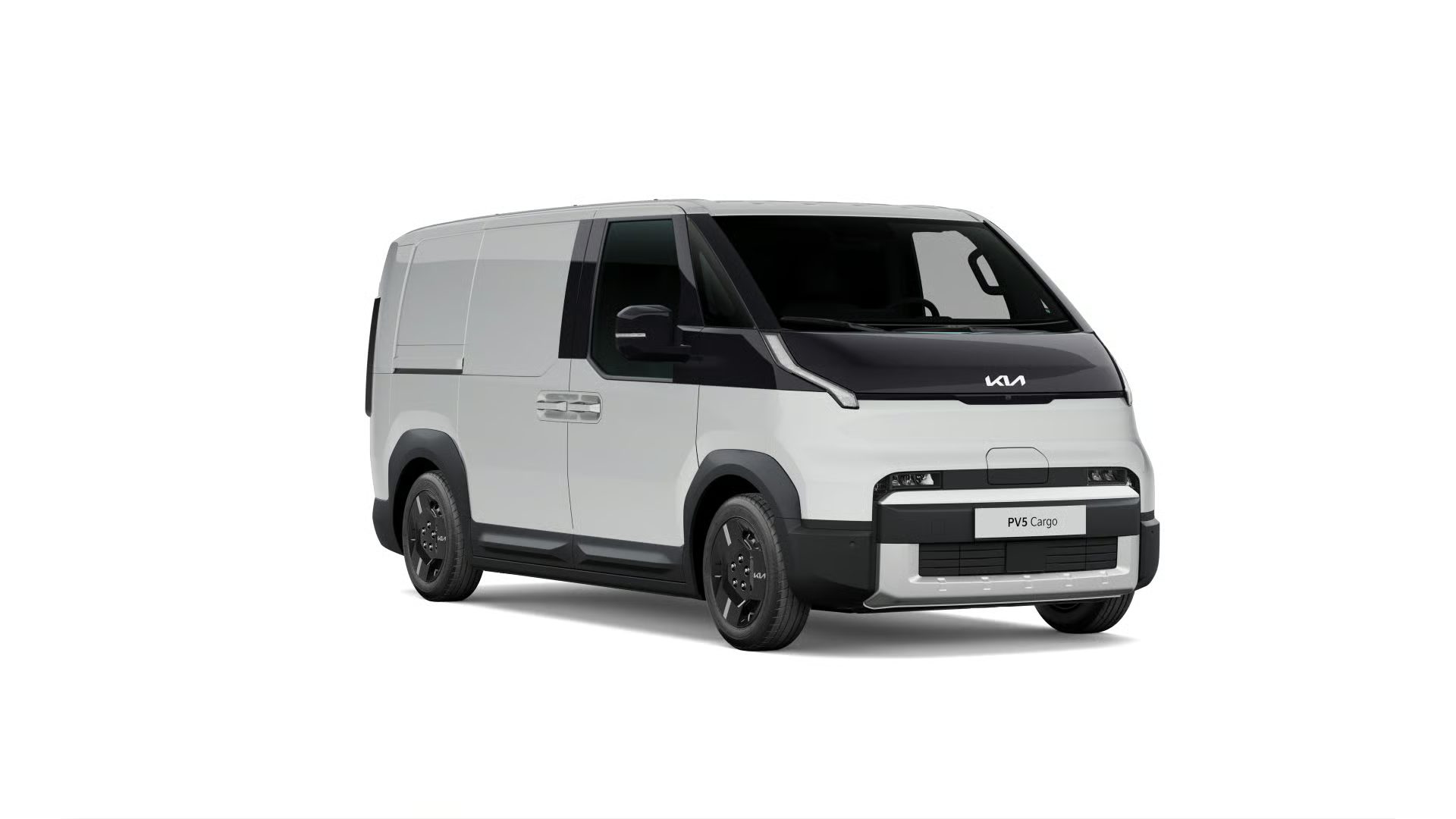
Price: From £27,645 +VAT
Range: 258 miles
Max Charging Capability: 100kW
Max Payload: 790kg
Max Volume: 4.4㎥
KIA are no stranger to making fantastic EVs, and the PV5 electric van certainly fits the mould. Whereas many other electric vans share the same body as their ICE counterparts, and therefore look almost identical, the PV5 is designed as an EV from the outset, with futuristic looks to match.
It fits between the small and medium van segments, so those who prioritise cargo space may opt for something larger. However, the PV5 isn’t small, and we really like the ultra-low loading height – something that last-mile delivery fleet drivers may too. What’s more, the size makes it easy to operate in busy, urban environments.
However, the exceptional value on offer is where the PV5 really shines. It offers excellent range and performance figures, as well as a 100,000-mile warranty, for a very competitive price. The looks may not be for everyone, but it’s hard to ignore KIA’s latest electric van.
As we’ve seen, the best electric vans on the market today offer an incredible mix of driveability, modern features, range and payload. As it becomes ever more expensive to operate ICE commercial vehicles, especially with rising fuel prices and expanding Low Emission Zones, switching to an electric fleet becomes a no-brainer.
However, it’s not a simple process, especially if you operate a large fleet. To protect your investment, it’s essential to work with a charging provider who can help you plan and deliver any required depot charging infrastructure upgrades.
This article is the second in our annual series that takes a retrospective look at some of the best electric vans of the year. Read our 2024 article to find out what’s changed.
The UK intends to ban the sale of all new ICE vehicles by 2030, a...
Data and analytics play a vital role in helping to improve fleet ...

Like other segments of logistics, last mile delivery businesses o...