What Are the Different Types of EV Chargers? 

Electric vehicle chargers fall into four main categories: slow, fast, rapid and ultra rapid. Each offers different power levels and charging times – and each is suited to specific site types, from workplace and destination charging to high-turnover retail and public rapid hubs.

Understanding these differences helps organisations choose the right charging speeds for their location, visitor patterns, and expected dwell times.

Learn more about EV charging speeds

For organisations:

  • Slow & fast chargers → ideal for workplaces and longer-stay destinations
  • Rapid chargers → well suited to retail parks, supermarkets and short-stay facilities
  • Ultra rapid chargers → best for forecourts, on-route sites and public charging hubs
Charger TypeCharging SpeedCharging Time (80%)
Slow chargers3kW – 7kW6-12hrs
Fast chargers7kW – 25kW  3-6hrs
Rapid chargers50kW – 150kW  30mins-1hr
Ultra rapid DC chargers150kW+10-20mins
Approximate to average EV battery capacity
ev fast charger

What is EV Fast Charging?

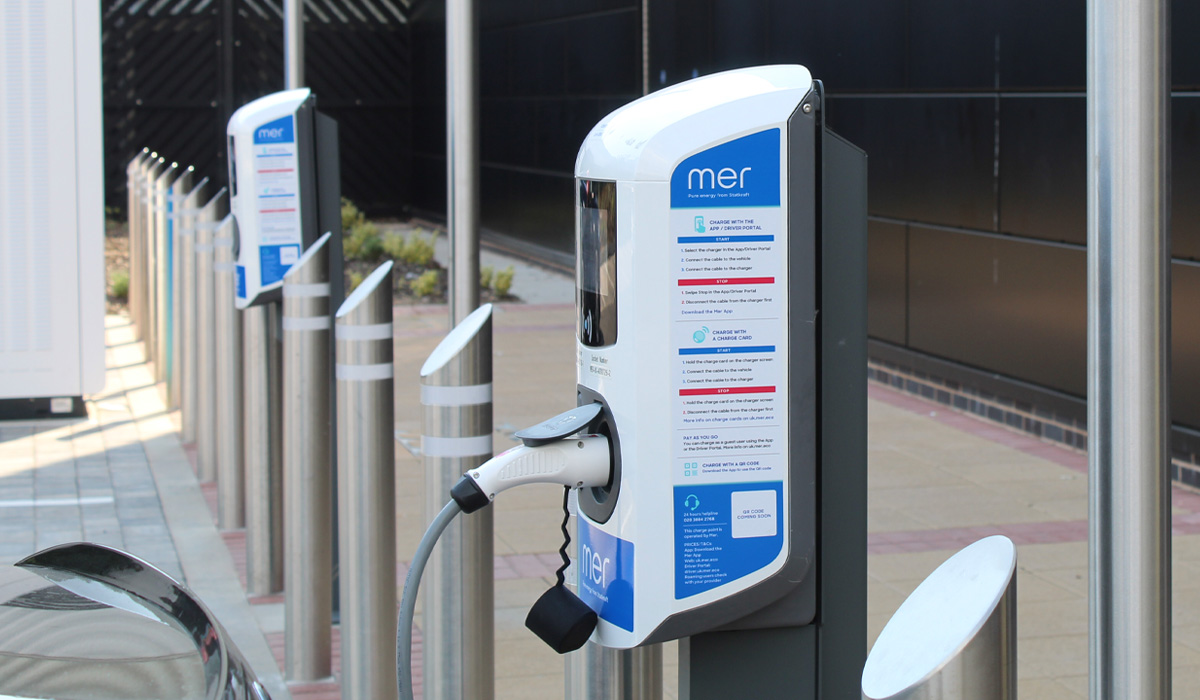
Fast chargers typically operate between 7kW and 25kW and are the most common type of EV charger found across the UK. They are well suited to locations where drivers remain parked for several hours, making them a practical choice for workplaces, long-stay car parks, leisure facilities, and destinations where charging doesn’t need to be rapid.

For home EV charging, most installations are limited to around 7.4kW, which sits at the lower end of the fast-charging range.

View our chargers
mer ev fast chargers

Fast Charging For Organisations

Fast chargers are ideal when your site has predictable or longer dwell times — for example:

  • Workplace car parks

  • Staff/visitor parking

  • Leisure centres and gyms

  • Hotels and longer-stay destinations

They offer a cost-effective foundation for EV charging strategies where rapid turnaround isn’t required.

Alpitronic EV Charger

What is Rapid and Ultra Rapid EV Charging? 

Rapid and ultra rapid chargers deliver significantly higher power than slow or fast chargers, offering much shorter charging times for drivers on the move.

  • Rapid chargers (50kW–150kW) can typically charge an EV to around 80% in 30–60 minutes.

  • Ultra rapid chargers (150kW–400kW) can achieve similar charge levels in 10–20 minutes, depending on the vehicle’s capability.

These high-power chargers are usually found on major routes, public charging hubs, forecourts, and locations where drivers need a quick turnaround.

As the UK’s public charging network expands, the share of rapid and ultra rapid chargers continues to grow – helping to reduce range anxiety and support long-distance electric travel.

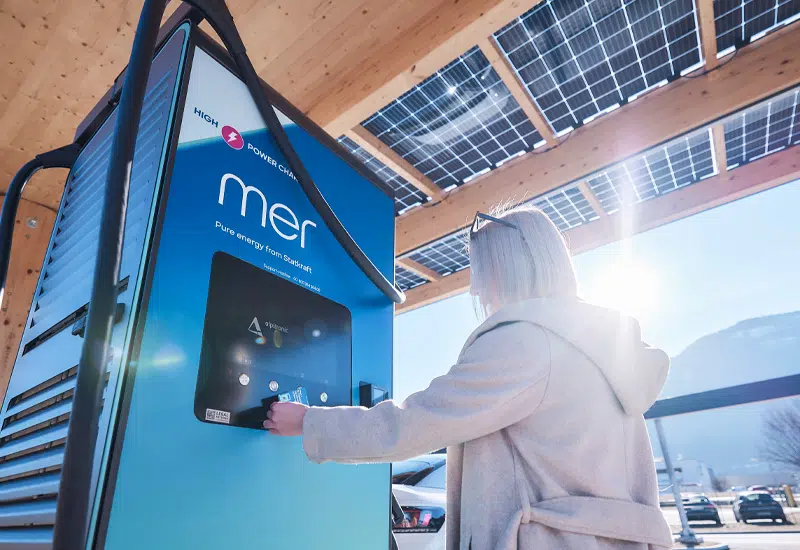
A young woman uses a Mer ultra rapid EV charging point, powered by renewable energy

Rapid vs Ultra Rapid EV Chargers

Rapid and ultra rapid chargers both provide high-powered DC charging, but they serve slightly different use cases depending on vehicle capability, expected dwell time, and site infrastructure.

Rapid chargers (50kW–150kW)
These are the most common DC units across UK retail parks, supermarkets, local authority car parks, and destination sites. They suit locations where visitors stay for around 30 minutes to an hour. Many earlier-generation EVs also max out at around 50kW, making rapid chargers a practical and widely compatible option.

Ultra rapid chargers (150kW–400kW)
Ultra rapid units are built for short-stay, high-turnover environments such as forecourts, motorway services, large transit hubs, and dedicated rapid-charging hubs. Newer EV models increasingly support 150kW+ charging speeds, making ultra rapid chargers the most future-proof choice for high-traffic commercial locations.

As EV battery technology continues to advance, more vehicles will be able to take advantage of ultra rapid charging – reducing charging time and improving site throughput.

Girl Charging at Mer Public Charger Stations for EV

Why Install Rapid and Ultra Rapid EV Chargers? 

Rapid and ultra rapid chargers offer high-powered, short-visit charging that helps drivers recharge quickly and continue their journeys with minimal delay. As EV adoption increases, demand for fast turnaround charging continues to grow – especially in locations where dwell times are short and driver expectations are rising.

Installing rapid or ultra rapid chargers can enhance site convenience, support customer satisfaction, and future-proof your location as more vehicles become capable of high-speed DC charging.

Benefits for Organisations

Rapid and ultra rapid charging can help organisations:

  • Reduce queuing and increase throughput during peak times

  • Attract EV drivers who prefer high-speed charging options

  • Boost dwell-time value for retail and leisure destinations

  • Support clean air and sustainability objectives

  • Future-proof infrastructure as charging technology advances

These charging types are particularly effective in short-stay or high-traffic environments where speed directly impacts customer experience and operational efficiency.

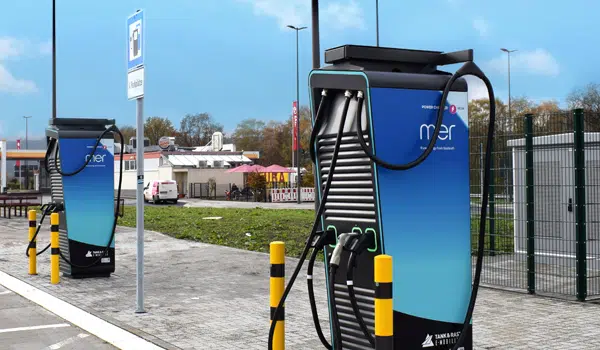
Electric car charging at EV charging hub

Installing Rapid and Ultra Rapid EV Charging Hubs 

Rapid and ultra rapid hubs bring together multiple high-powered chargers in one location, enabling efficient, short-stay charging for drivers and supporting higher throughput at busy sites. Installing hubs in the right place is essential – factors such as grid capacity, traffic flow, local demand and dwell time all influence how effective a hub will be.

Local authorities, commercial landowners, and forecourt operators increasingly use hub-style layouts to meet growing EV demand and provide reliable charging access in their regions.

Talk to us about hub planning

Reliable charging, renewable power, and infrastructure built to support the UK’s growing EV demand.


Rapid & Ultra Rapid Charging FAQs

Explore the most common questions about high-power EV charging. These short guides explain charging speeds, compatibility, and how rapid and ultra rapid units fit different business and public-sector sites.

Rapid chargers typically deliver 50kW to 150kW, providing an 80% charge in around 30–60 minutes.
Ultra rapid chargers deliver 150kW to 400kW, allowing many newer EVs to reach similar charge levels in 10–20 minutes, depending on the vehicle’s capability.

Ultra rapid units are best for short-stay, high-turnover locations such as forecourts, retail hubs and public rapid-charging sites.

No – 50kW is the lower end of rapid DC charging.
Fast chargers typically range from 7kW to 25kW and are suited to longer dwell times such as workplaces, car parks and destinations.

50kW and above is usually found at retail parks, rapid hubs and forecourts

Ultra rapid chargers provide 150kW to 400kW, enabling many EVs to reach 80% charge in 10–20 minutes.
The actual charging speed depends on the EV’s maximum charging capability and battery conditions.

Most modern EVs can use rapid DC chargers (50kW+).
Only some models can take ultra rapid power above 150kW – and even then, only at specific battery temperatures and charge levels.

If an EV cannot accept the full power, the charger automatically adjusts output to a safe level.

Rapid and ultra rapid chargers work best at locations with shorter dwell times or higher turnover, such as:

  • Retail parks and supermarkets

  • Petrol stations and forecourts

  • Local authority rapid hubs

  • Short-stay car parks

  • High-traffic commercial sites

These locations benefit from quick throughput and reduced queuing.

Yes – but typically only for on-route or opportunity charging. Most fleets rely on fast AC or rapid DC charging at depots or workplaces for predictable scheduling.

Ultra rapid is mainly used where turnaround time is critical or where vehicles operate across long routes.

Learn more about fleet charging

No – these chargers are safe for EV batteries.
Modern battery management systems regulate charging speed automatically, slowing down when needed to protect the battery.

Ultra rapid charging may create more heat, but it is within manufacturer-approved limits.

Charging speed depends on:

  • The vehicle’s maximum charging capability

  • Battery temperature

  • State of charge

  • Charger power availability

  • Site load management

Even on a 300kW charger, the vehicle will only take the maximum power it supports.

Rapid hubs combine multiple high-power chargers in one place, designed for short-stay sessions and high turnover.
They typically include:

  • Several rapid or ultra rapid units

  • Safe, efficient bay layouts

  • Strong grid connections or load-balanced power

  • Easy access for passing traffic

They are used by local authorities, forecourts and commercial operators to support EV travel across an area.